
Search engines are designed to satisfy user intent. Understanding why someone searches for a term is more important than simply knowing what they search for.
This article explains how search intent shapes SEO strategy and content planning, and why aligning content with intent is essential for long-term visibility.
What Is Search Intent?
Search intent refers to the goal behind a user’s query. It reflects what the user expects to find when they perform a search.
Why Search Intent Matters for SEO
Search engines prioritize results that best match user intent, not just keywords.
Types of Search Intent
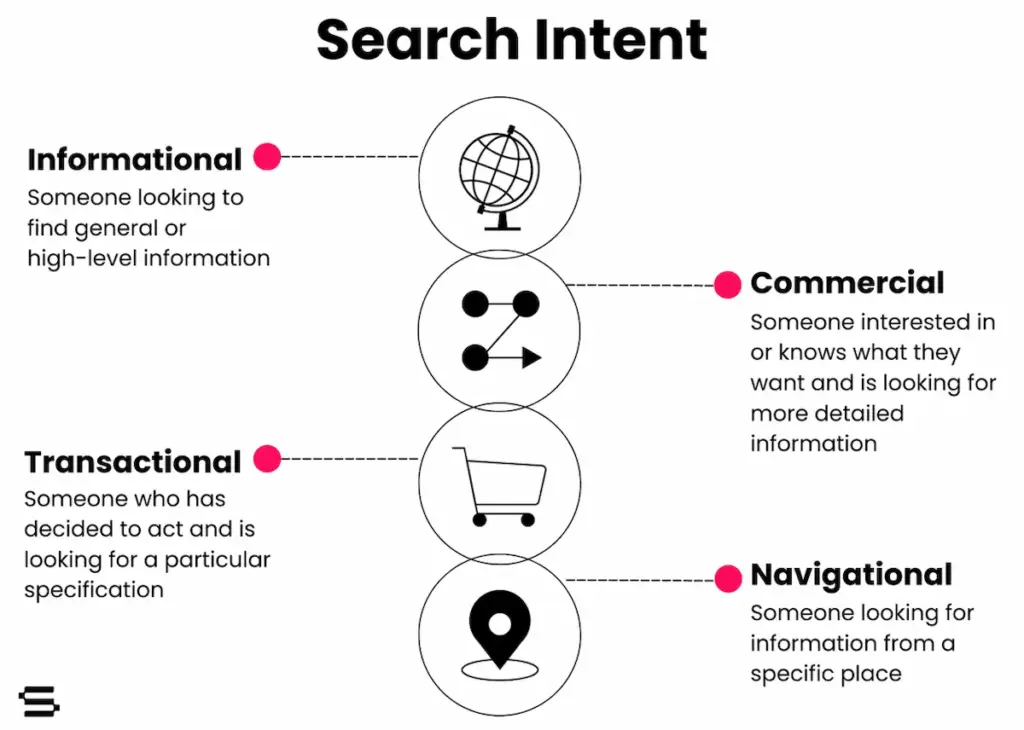
Informational Intent
Users seek answers, explanations, or knowledge.
Navigational Intent
Users want to reach a specific website or platform.
Transactional Intent
Users are ready to take an action or make a purchase.
Commercial Investigation
Users compare options before deciding.
Search Intent vs Keywords
| Search Intent | Keywords |
|---|---|
| User goal | Search terms |
| Meaning-driven | Phrase-driven |
How Search Engines Interpret Intent
Search engines analyze query patterns, content types, and user behavior.
Search Intent and Content Types
Different intents require different content formats.
Aligning Content With Search Intent
Content must directly address the user’s purpose.
Search Intent in Content Planning
Understanding intent helps plan blog posts, landing pages, and guides.
Search Intent and User Experience
Matching intent improves engagement and satisfaction.
Search Intent for Businesses
Businesses use intent to guide conversion-focused content.
Search Intent for Blogs and Publishers
Publishers attract sustained traffic by answering informational intent.
Common Search Intent Mistakes
- Targeting keywords without intent analysis
- Mismatched content format
- Ignoring SERP features
Search Intent and SEO Performance
Intent-aligned content ranks better and retains traffic longer.
Future of Search Intent in SEO
As search evolves, intent understanding becomes more critical.
Common Myths About Search Intent
- Intent never changes
- Keywords alone determine rankings
- Intent matters only for sales pages
Final Thoughts
Search intent is the foundation of effective SEO and content planning. Aligning content with user goals improves visibility, engagement, and trust.
Successful SEO begins with understanding what users truly want.