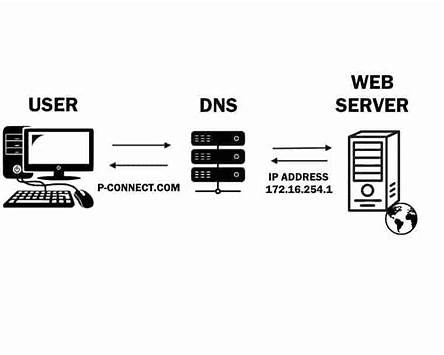
Every time you visit a website, a complex yet invisible system works in the background to connect your browser to the correct server. This system is known as DNS, or the Domain Name System.
Without DNS, users would need to remember long numerical IP addresses instead of simple domain names. This article explains what DNS is, how it works, and why it is essential for the modern internet.
What Is DNS?
DNS stands for Domain Name System. It is a global directory that translates human-readable domain names into machine-readable IP addresses.
Why DNS Is Important
DNS makes the internet usable, scalable, and accessible. It allows websites to change servers without changing domain names.
Domain Names vs IP Addresses
| Domain Name | IP Address |
|---|---|
| Easy to remember | Numerical format |
| User-friendly | Machine-readable |
How DNS Resolution Works
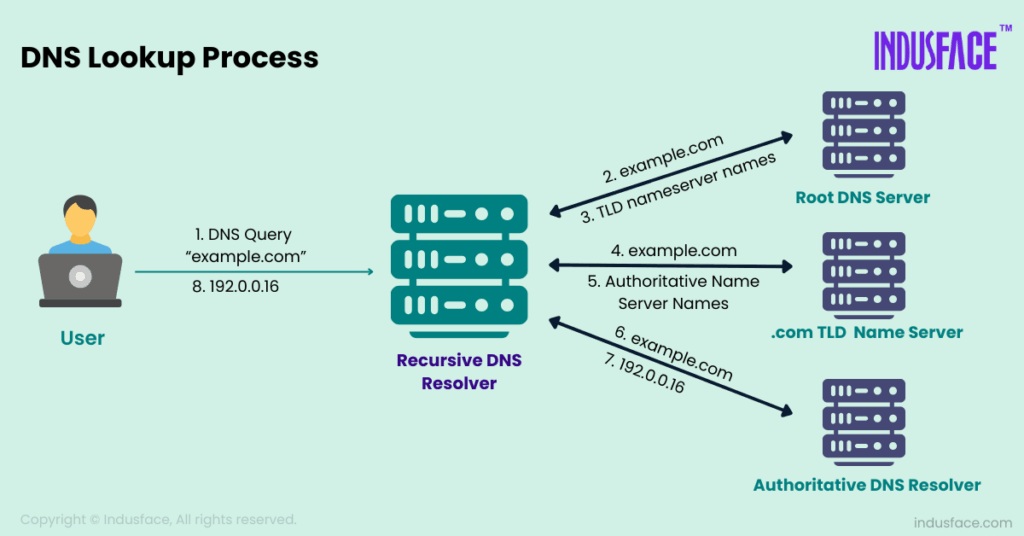
DNS Query Initiation
The process begins when a user enters a domain name into a browser.
Recursive DNS Resolver
The resolver checks cache or forwards the request.
Root DNS Server
The root server directs the query to the appropriate TLD server.
Top-Level Domain Server
The TLD server identifies the authoritative server.
Authoritative DNS Server
This server returns the IP address of the website.
Types of DNS Records
- A Record
- AAAA Record
- CNAME Record
- MX Record
- TXT Record
DNS Caching Explained
DNS caching stores lookup results temporarily to improve speed and reduce load.
DNS and Website Performance
Fast DNS resolution improves page load times and reliability.
DNS and Website Security
DNS plays a critical role in preventing malicious traffic and phishing attacks.
Public DNS vs ISP DNS
Public DNS services often provide better speed, privacy, and reliability.
DNS Propagation Explained
Changes to DNS records take time to spread across the global network.
Common DNS Issues
- DNS cache problems
- Incorrect records
- Propagation delays
- DNS server outages
DNS for Website Owners
Understanding DNS helps website owners manage hosting, email, and security.
DNS and Hosting Relationship
DNS connects domain names to hosting servers without storing website files.
Future of DNS
DNS continues to evolve with encryption and performance improvements.
Common Myths About DNS
- DNS hosts websites
- DNS changes are instant
- DNS only affects large sites
Final Thoughts
DNS is a foundational technology that keeps the internet functioning smoothly. By translating domain names into IP addresses, DNS enables seamless navigation across billions of websites.
Understanding DNS helps website owners, developers, and businesses maintain performance, reliability, and security.